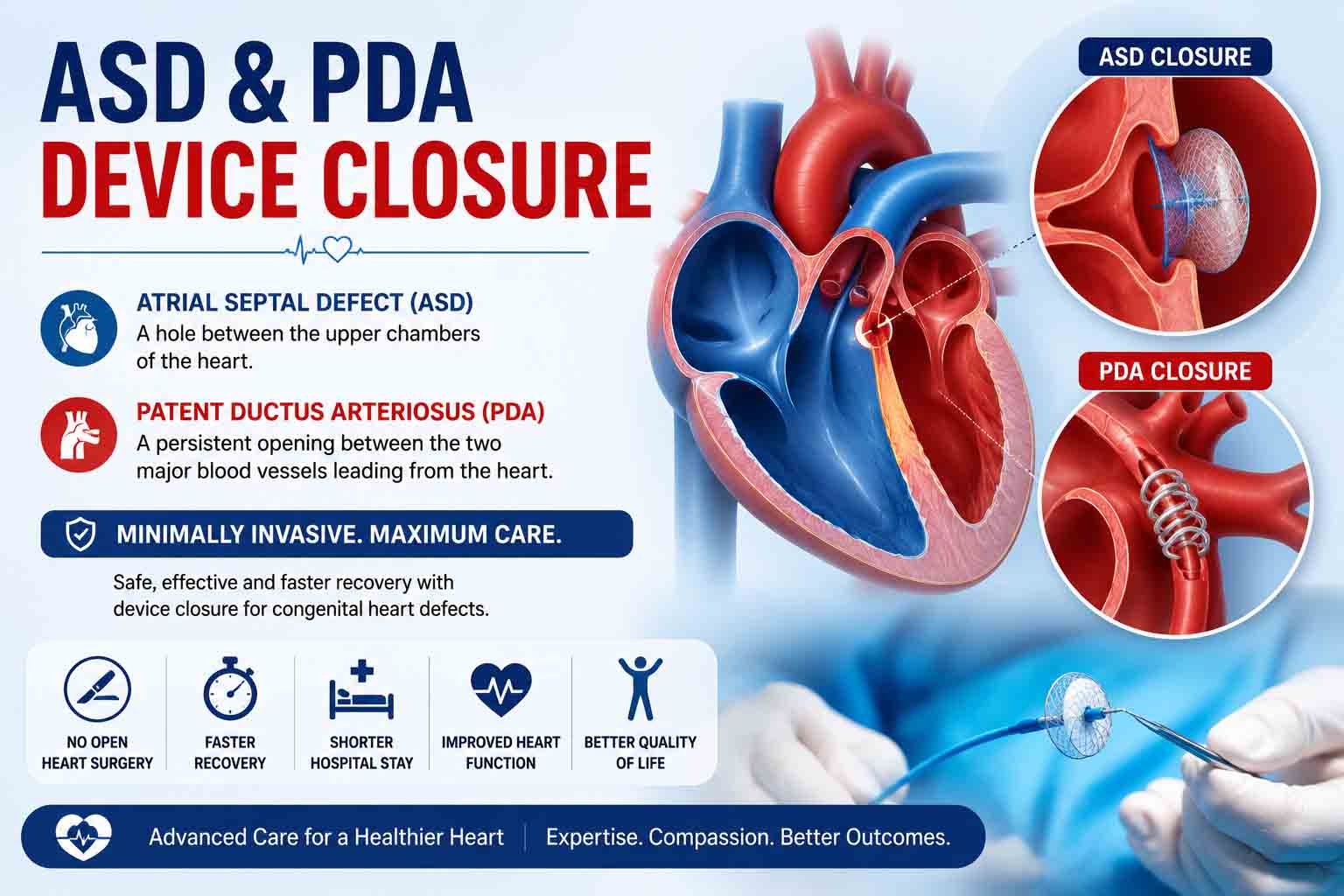
ASD (Atrial Septal Defect) and PDA (Patent Ductus Arteriosus) are common congenital heart defects that can affect blood flow within the heart and lungs. Modern device closure procedures offer a safe, effective, and minimally invasive alternative to open-heart surgery for correcting these conditions and restoring normal heart function.
An Atrial Septal Defect (ASD) is a hole in the wall (septum) that separates the two upper chambers of the heart (atria). This opening allows oxygen-rich blood to mix with oxygen-poor blood, causing the heart and lungs to work harder than normal.
If left untreated, ASD can lead to:
Patent Ductus Arteriosus (PDA) is a condition where a blood vessel called the ductus arteriosus fails to close naturally after birth. This persistent opening allows abnormal blood flow between the aorta and pulmonary artery, placing additional strain on the heart and lungs.
Symptoms may include:
ASD and PDA device closure are catheter-based procedures performed by an interventional cardiologist. A specially designed closure device is delivered through a thin catheter inserted into a blood vessel, usually in the groin. The device is positioned across the defect, permanently sealing the abnormal opening without the need for major surgery.
Device closure has become the preferred treatment for many patients with ASD and PDA due to its excellent success rates and minimally invasive nature. The procedure is performed under advanced imaging guidance, ensuring precise placement of the closure device and optimal outcomes.
With expertise in structural heart interventions and congenital heart disease management, we provide comprehensive evaluation, diagnosis, and treatment planning for patients requiring ASD or PDA closure. Our goal is to restore normal heart function, prevent long-term complications, and help patients lead healthy, active lives.
Early diagnosis and timely treatment of congenital heart defects can significantly improve long-term heart health and overall well-being.