Coronary artery disease (CAD) is one of the most common causes of heart attacks and cardiovascular complications worldwide. When the arteries supplying blood to the heart become narrowed or blocked due to plaque buildup, blood flow to the heart muscle is reduced. This can lead to chest pain, shortness of breath, and even life-threatening heart attacks.
One of the most effective treatments for restoring blood flow to the heart is Coronary Angioplasty, a minimally invasive procedure that has transformed the management of coronary artery disease. Understanding the benefits of coronary angioplasty can help patients make informed decisions about their heart health.
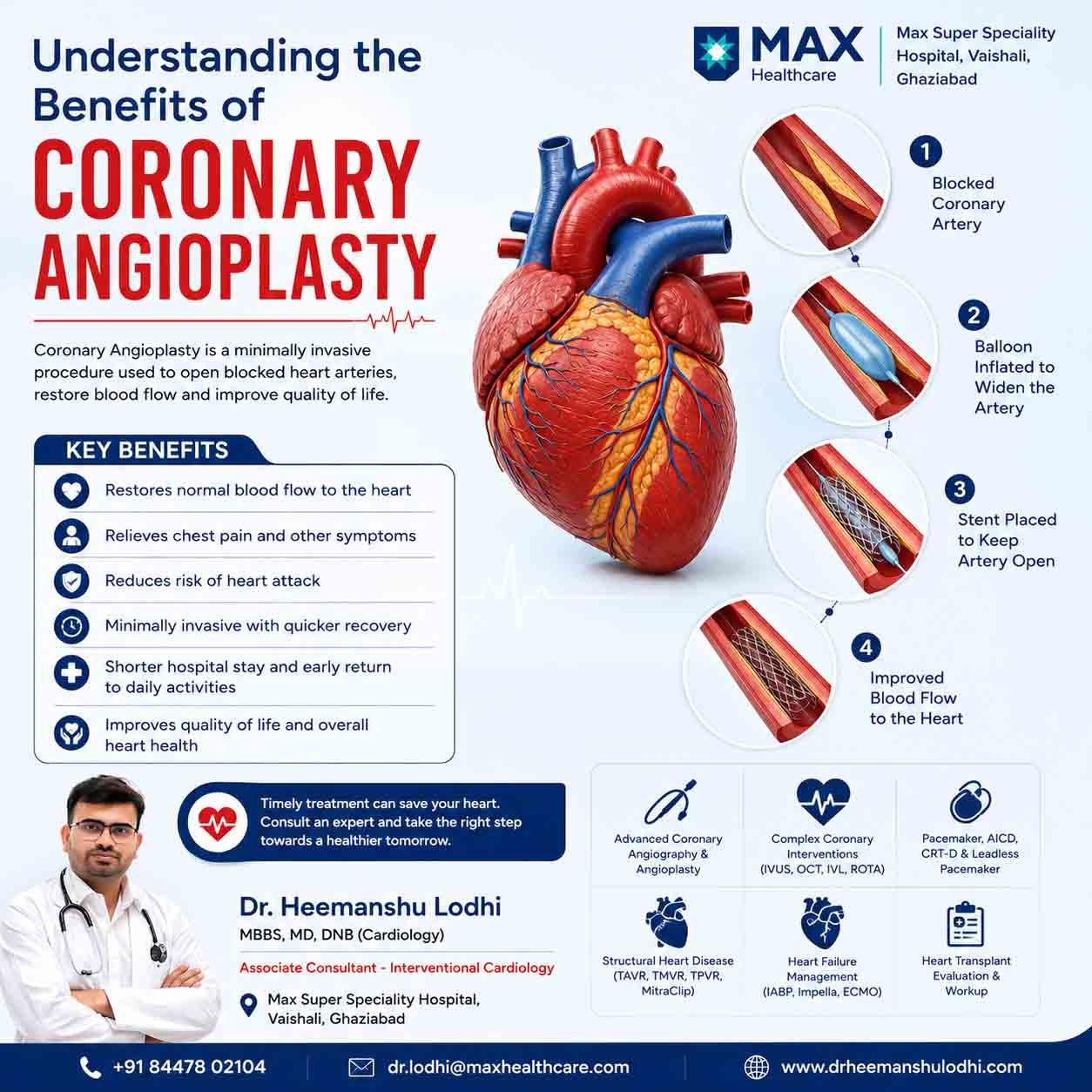
Coronary angioplasty, also known as Percutaneous Coronary Intervention (PCI), is a procedure used to open narrowed or blocked coronary arteries. During the procedure, a cardiologist inserts a thin catheter through a blood vessel, usually in the wrist or groin, and guides it to the blocked artery.
A small balloon at the tip of the catheter is inflated to widen the artery, and in most cases, a stent is placed to keep the artery open and maintain healthy blood flow.
Your cardiologist may recommend angioplasty if you have:
The primary benefit of angioplasty is the restoration of normal blood flow through blocked or narrowed arteries. Improved circulation ensures that the heart muscle receives sufficient oxygen and nutrients.
Many patients experience immediate relief from chest pain and discomfort after the procedure. This significantly improves day-to-day comfort and physical activity levels.
By opening blocked arteries, angioplasty helps reduce the risk of future heart attacks and other serious cardiac complications.
Unlike open-heart surgery, angioplasty is performed through a small puncture in the wrist or groin. There are no large surgical incisions, making the procedure less traumatic for patients.
Most patients can return home within one or two days after angioplasty. Recovery is considerably faster compared to bypass surgery.
Patients often report better exercise tolerance, reduced fatigue, and increased confidence in performing daily activities after successful angioplasty.
In cases of acute heart attack, emergency angioplasty can quickly restore blood flow to the heart muscle, minimizing damage and improving survival rates.
Modern drug-eluting stents help keep arteries open and reduce the risk of re-narrowing, providing long-term benefits and better outcomes.
Recovery after coronary angioplasty is generally smooth. Patients are advised to:
Adopting healthy lifestyle habits is essential to maintain the benefits of the procedure and prevent future blockages.
Coronary angioplasty is considered a safe procedure when performed by experienced interventional cardiologists. Although complications are uncommon, potential risks may include:
Your cardiologist will discuss all potential risks and benefits before the procedure.
While angioplasty effectively treats blocked arteries, prevention remains the best strategy. To maintain a healthy heart:
Coronary angioplasty is a highly effective and minimally invasive treatment for coronary artery disease. By restoring blood flow to the heart, relieving symptoms, and reducing the risk of heart attacks, it has become one of the most important advances in modern cardiology.
If you experience chest pain, shortness of breath, or have risk factors for heart disease, consult an experienced cardiologist for timely evaluation. Early diagnosis and treatment can protect your heart and improve your quality of life for years to come.