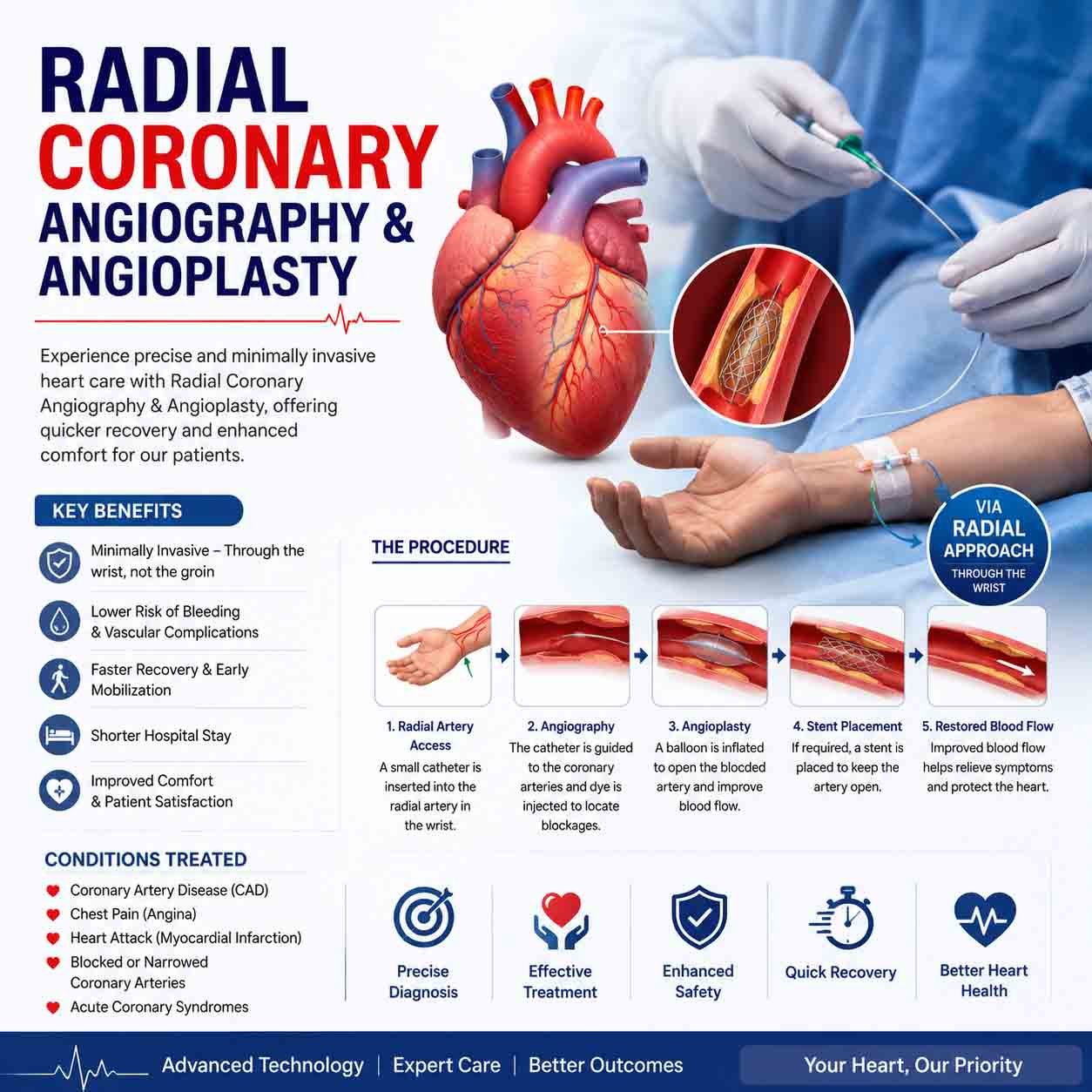
Radial Coronary Angiography and Angioplasty is an advanced, minimally invasive cardiac procedure performed through the radial artery in the wrist instead of the traditional groin approach. This modern technique allows cardiologists to diagnose and treat blocked coronary arteries with greater patient comfort, reduced complications, and faster recovery.
During coronary angiography, a thin catheter is guided through the radial artery to visualize the heart's blood vessels and identify any blockages. If significant narrowing or blockage is detected, angioplasty can be performed immediately to restore blood flow by widening the artery and, when necessary, placing a stent to keep it open.
The radial approach has become the preferred method for many interventional cardiologists due to its enhanced safety and convenience. Patients can sit up, walk sooner, and return to normal activities more quickly compared to traditional methods. It is especially beneficial for elderly patients and those at higher risk of bleeding complications.
With advanced expertise and state-of-the-art cardiac care, Radial Coronary Angiography & Angioplasty offers a safe, effective, and patient-friendly solution for diagnosing and treating heart artery blockages while ensuring optimal clinical outcomes.